For a drywall repair, start by identifying the existing panel thickness and the construction it belongs to. The replacement needs to fit the wall and meet that assembly’s requirements.
Thicker board isn’t automatically the right answer. A panel that stands proud of the surrounding surface can make the patch harder to finish, and thickness alone doesn’t establish a fire rating.
Common thicknesses and the questions behind them
| Thickness | What to check |
|---|---|
| 1/4 inch | Often associated with specialty bending or overlay work. Confirm the product and allowed use. |
| 1/2 inch | Common for interior work, but wall and ceiling suitability depends on the specific panel and installation. |
| 5/8 inch | Available in several products, including Type X panels. Confirm the required product and assembly rather than choosing by thickness alone. |
The board’s length and width are separate choices. A larger sheet may reduce joints, but access and safe handling also matter.
Half-inch board isn’t automatically wrong for a ceiling
The old shortcut “framing wider than 16 inches always requires 5/8-inch drywall” misses product differences.
USG’s Sheetrock UltraLight panel data sheet permits specified half-inch ceiling applications on 24-inch-on-center framing. The document includes conditions for orientation, texture, and insulation loading.
That doesn’t make all half-inch panels suitable for that spacing. Find the actual panel instructions and the assembly requirements before replacing a ceiling section.
A fire rating belongs to the assembly
Type X board is one component of a fire-resistant construction. It isn’t a promise that any wall covered with that sheet has a particular hourly rating.
USG’s fire-resistant assemblies guide specifies complete constructions. Repairs may need to preserve board layers, framing, fasteners, and joint treatment.
If the wall separates a garage, dwelling, or other protected space, have the contractor establish the required repair details. Don’t guess from the visible face paper.
Moisture resistance is another separate issue
A thicker panel won’t correct water entry. A moisture-resistant panel also doesn’t replace an approved shower waterproofing system.
If the damaged section is wet or soft, identify the source and assess the affected area first. Our Plano water-heater area project involved drywall and insulation as well as texture and paint. The repair scope extended beyond choosing a sheet thickness.
Get the patch flush and supported
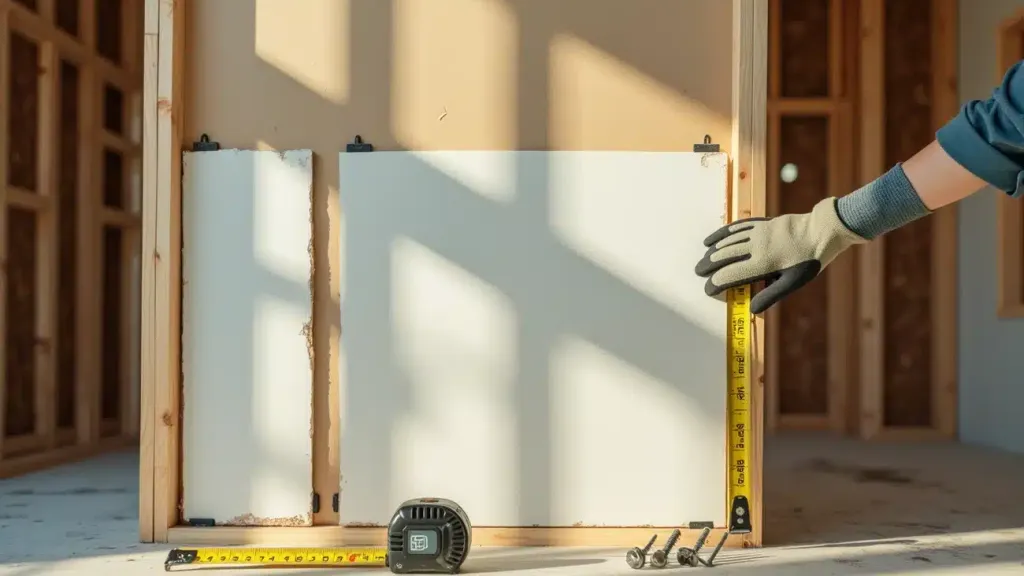
Where it can be checked safely, measure the existing board at an exposed edge. Multiple layers may look like one thick panel until you inspect the edge.
The repair also needs sound support and proper fastening. Filling a depth mismatch with a heavy layer of compound isn’t a substitute for planning the patch correctly.
Before painting, agree on the finishing endpoint: smooth compound, texture, primer, or paint. Our Sheetrock versus drywall guide covers why the product and finish matter more than the brand name alone.
Send us a photo of the damage and a wider view of the wall or ceiling. We can review what needs to be identified before choosing the replacement board.
Need a Handyman You Can Trust?
Tell us what needs fixing. We’ll help you get a fair quote for the work.