Did you know that asbestos floor tiles could be hiding in plain sight in your home? From the 1950s to the 1980s, asbestos was common in construction. It was especially used in floor tiles found in many American homes.
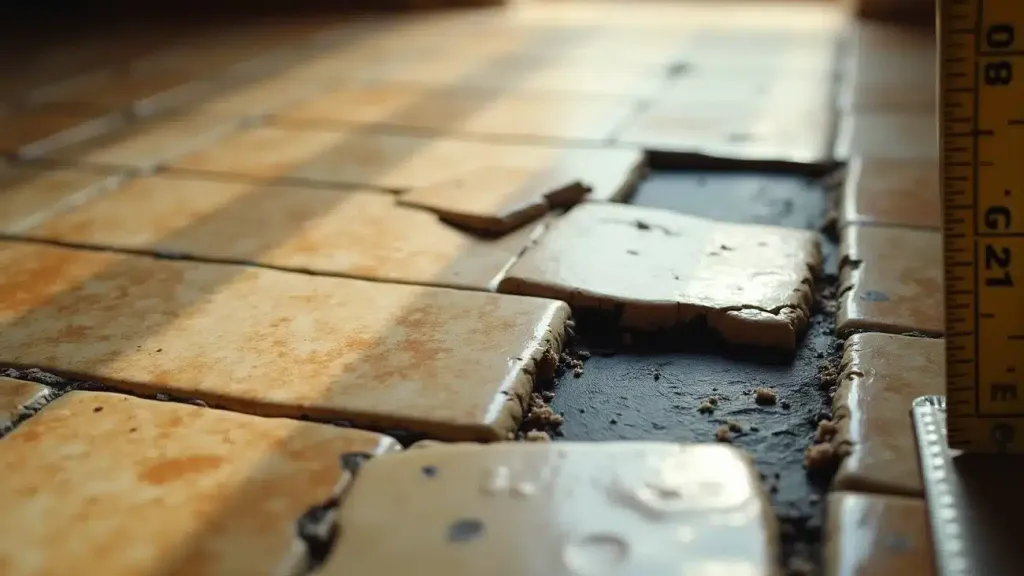
Unfortunately, asbestos tile identification isn’t as straightforward as we might hope. These hazardous materials can be hard to spot. Asbestos is often hidden in building materials. What does asbestos flooring look like? Typically thin and brittle, these tiles were commonly sold in sizes of 9″×9″, 12″×12″, and 18″×18″ during their peak usage period.
Asbestos exposure is a real concern. The CDC links it to serious health problems, like lung cancer, asbestosis, and mesothelioma. These issues can show up 30 to 40 years after exposure. Damaged or worn tiles raise the risk a lot. They can release harmful fibers into the air.
Before you panic, remember that undisturbed asbestos floor tiles generally pose minimal risk. However, the only sure way to determine if your floor tiles contain asbestos is through professional testing. In this visual guide, we’ll show you how to spot potential asbestos floor tiles in your home and explain the steps to take if you suspect their presence.
How to Visually Identify Asbestos Floor Tiles

Image Source: ABI Home Inspection Services
Identifying potential asbestos floor tiles requires careful observation of several key characteristics. Laboratory tests are the only sure way to confirm asbestos. But, these visual signs can help you decide if you need professional testing.
Check the age of your home or flooring
The manufacturing period of your flooring provides important clues. Asbestos floor tiles were widely used from the 1920s to the 1980s. Their most popular years were from the 1950s to the late 1980s. If your home was built or renovated during this time, it’s more likely to have asbestos floor tiles. Even buildings made before 1999 might have these materials. The total ban on asbestos was different in each country.
Look for common tile sizes like 9×9 or 12×12
Tile dimensions offer another reliable indicator. Asbestos floor tiles typically came in three standard sizes:
- 9″ × 9″ (most common)
- 12″ × 12″
- 18″ × 18″
Additionally, these tiles are often slightly thicker than modern alternatives. Measuring your floor tiles can provide valuable insights into their composition.
Notice any oily discoloration or fading
Asphalt-based asbestos floor tiles frequently develop a distinctive appearance over time. Look for tiles that appear:
- Greasy or oily in certain areas
- Faded or yellowed unevenly
- Stained with dark spots or patches
These visual changes usually happen because asphalt breaks down. Oil components leak out over the years, leading to the typical discoloration.
Inspect for thick black adhesive underneath
The adhesive used to install asbestos floor tiles often contains asbestos itself. If any tiles have come loose, examine the underside and subfloor for:
- Thick, black, tar-like adhesive
- Substance known as “black mastic” or “cutback adhesive”
This asphalt-based adhesive was widely used before the 1980s. It often contains asbestos, even if the tiles do not. It often appears flat against the subfloor with faint comb-like marks or swirls from application.
What Do Asbestos Floor Tiles Look Like?

Image Source: RPF Environmental
Asbestos floor tiles have unique visual traits. However, no one feature can confirm their presence without lab tests. These tiles were made in many styles. This makes them hard to identify, but careful observation can help.
Thin and brittle appearance
Asbestos floor tiles typically appear noticeably thinner compared to modern alternatives. They break easily when disturbed, showing their brittle nature. When removed, these tiles usually require scraping rather than lifting whole pieces. A key feature is their fragility. You can often break them in half with just your hands. But never do this without proper protective gear. Moreover, thermoplastic asbestos tiles rank among the most common types and also tend to be extremely brittle.
Often dark-colored or dull
The color profile of asbestos tiles varies significantly depending on their composition:
- Asphalt-based tiles typically feature darker colors like black, dark gray, and brown due to the asphalt binder
- Vinyl-asbestos tiles often appear in lighter shades including cream, pink, light blue, and green
- Over time, many develop characteristic oily discoloration or uneven fading
- Some tiles may exhibit yellowing or dark spots where asphalt components have leaked out
Asbestos tiles made before 1960 were usually 9″×9″ and could have up to 70% asbestos by weight. They often appeared darker since asphalt was the main binder.
May resemble standard vinyl or thermoplastic tiles
Identifying asbestos floor tiles through visual inspection alone presents considerable challenges because:
- Asbestos fibers are microscopic and invisible to the naked eye
- They were often mixed with materials like vinyl. This made them look just like non-asbestos tiles.
- Vinyl-asbestos tiles are particularly deceptive as they appear similar to modern vinyl flooring
- Asbestos sheet flooring often mimicked the appearance of carpeting, stone, or wood
- Sometimes newer non-asbestos tiles have been installed alongside older asbestos tiles, creating confusion
Vinyl flooring that contains asbestos can look the same as flooring that does not. Visual clues alone cannot confirm the material.
How to Confirm Asbestos in Floor Tiles
Despite visual clues, identifying asbestos tiles with absolute certainty requires scientific testing. Visual inspection alone cannot definitively determine if your flooring contains this hazardous material.
Do not collect a sample yourself
The U.S. Environmental Protection Agency recommends that homeowners not take their own samples. Sampling can release fibers and can be more hazardous than leaving suspected material alone. If testing is appropriate because the flooring is damaged or a renovation may disturb it, have a properly trained and accredited asbestos inspector collect the sample and use a qualified laboratory. See the EPA’s home asbestos guidance.
Hire a trained and accredited asbestos inspector
Professional inspection remains the most reliable method:
- Ask for the inspector’s current training, accreditation, and any credentials required for the building and scope
- They collect samples properly and send them to accredited laboratories
Essentially, professionals follow strict protocols, minimizing contamination risks. Make sure to request credentials and certifications demonstrating proper training. Also, think about hiring separate companies for testing and removal. This helps avoid any conflicts of interest.
Check for manufacturer codes or labels
Sometimes, manufacturer information can help determine asbestos content:
To check for identifying marks:
- Carefully loosen a tile using a putty knife
- Clean off any adhesive or drywall paper
- Look for letters and numbers at the center of the tile’s back
Research these codes online or contact your local building authority for assistance afterward. Even with manufacturer info, lab testing is the only way to confirm asbestos content.
Remember that disturbing suspected asbestos-containing materials increases health risks. Undoubtedly, leaving testing to qualified professionals represents the safest approach for most homeowners.
Safety Tips Before You Disturb Suspected Tiles

Image Source: Seton
The most crucial aspect of dealing with potential asbestos floor tiles is ensuring your safety. Even suspected asbestos materials should be approached with extreme caution. The golden rule experts emphasize: if you think a floor tile contains asbestos, avoid disturbing it whenever possible.
Avoid drilling, cutting, or sanding the tiles
Asbestos becomes dangerous primarily when its fibers become airborne and can be inhaled. Consequently, certain activities dramatically increase your risk of exposure:
- Never drill, sand, scrape, saw, cut, break, or damage suspected asbestos tiles in any way
- Avoid buffing or using abrasive cleaning methods on older floor tiles
- Refrain from moving or disturbing tiles that appear damaged
- Do not attempt DIY removal of suspected asbestos materials
Fortunately, undisturbed asbestos-containing materials in good condition typically pose minimal health risks. As the EPA advises, “leaving asbestos material that is in good condition alone is usually the best thing to do.”
Seal off the area if tiles are damaged
If you discover damaged tiles that might contain asbestos:
- Immediately limit access to the area
- Do not touch, sweep, vacuum, drill, sand, scrape, or otherwise disturb the material
- Keep children and pets away
- Contact a trained and accredited asbestos professional for instructions appropriate to the property
Instead of attempting repairs yourself, contact a licensed asbestos professional promptly. Remember that improper handling can actually increase your exposure risk.
Do not rely on ordinary protective gear for DIY sampling
An N95 or other filtering facepiece is not a substitute for professional asbestos controls, training, containment, and properly selected respiratory protection. Do not collect, clean up, repair, or remove suspected asbestos material yourself. A qualified asbestos professional can assess the material and explain the rules and controls that apply to the building and planned work.
Conclusion
So, to find possible asbestos floor tiles in your home, you need to look closely and consider the history. Thin, brittle tiles, either 9″×9″ or 12″×12″, may have oily stains. These could hide a dangerous secret. This is especially true for homes built from the 1920s to the 1980s.
The key point is that undisturbed asbestos floor tiles usually have low health risks. However, damaged or deteriorating tiles can release harmful fibers, creating serious health hazards. Professional testing is the only sure way to confirm asbestos presence.
Safety must come first when dealing with suspected asbestos materials. Avoid drilling, cutting, sanding, sweeping, vacuuming, or otherwise disturbing the tiles. Limit access to damaged material and ask a trained and accredited asbestos professional what to do next.
Additionally, remember that DIY sampling or removal can create more danger than it solves. The Smart Fix Handyman does not test, disturb, remove, or abate suspected asbestos. Contact us for ordinary repairs only after a qualified asbestos professional has confirmed the work area and planned scope are safe for standard handyman work.
Finally, knowledge remains your best defense against asbestos-related health risks. We can protect ourselves and our families by spotting warning signs and taking action. This keeps our homes safe and sound while reducing unnecessary risks.
FAQs
Q1. How can I visually identify potential asbestos floor tiles in my home? Look for thin, brittle tiles in sizes like 9″x9″ or 12″x12″, especially in homes built between the 1920s and 1980s. Check for oily discoloration, uneven fading, or dark adhesive underneath. However, visual inspection alone cannot confirm asbestos presence.
Q2. Are asbestos floor tiles dangerous if left undisturbed? Undisturbed asbestos floor tiles in good condition generally pose minimal health risks. Danger occurs when these tiles get damaged or worn out. This can release harmful fibers into the air.
Q3. What should I do if I suspect my floor tiles contain asbestos? Avoid disturbing the tiles in any way. Do not drill, cut, sand, sweep, or vacuum them. Limit access to damaged material and contact a trained and accredited asbestos inspector. The EPA recommends that a properly trained professional take any sample that is needed.
Q4. Can I remove asbestos floor tiles myself? Do not attempt DIY removal of suspected asbestos material. Improper handling can increase exposure. Ask a trained and accredited asbestos professional which rules and safe-work requirements apply to your property.
Q5. Should I collect a sample for testing? No. The EPA recommends that homeowners not take their own samples because incorrect sampling may release fibers. A properly trained and accredited asbestos inspector should collect any needed sample and send it to a qualified laboratory.
Need a Handyman You Can Trust?
Skip the franchise fees. Get local expertise and honest pricing.