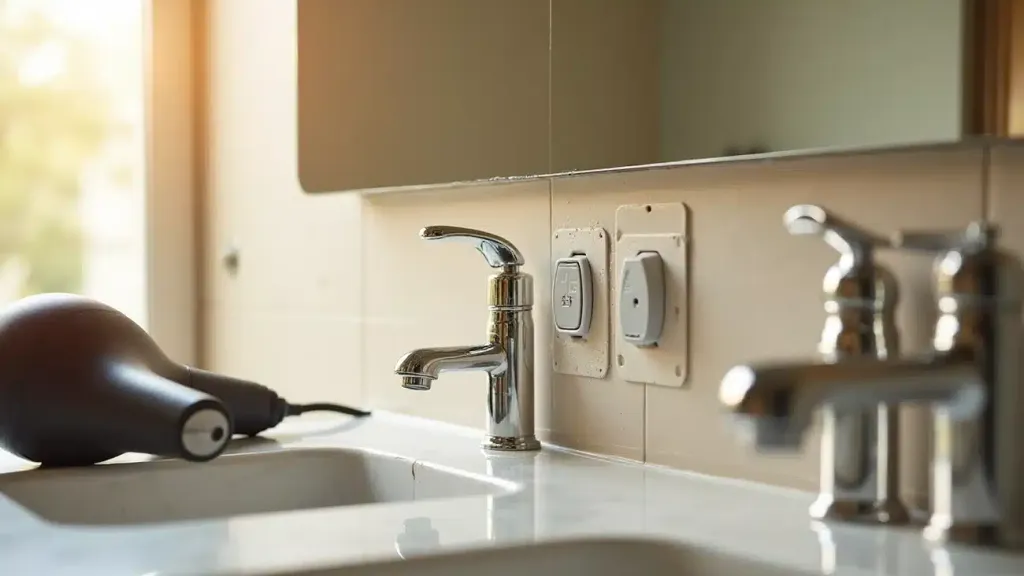
Keep plug-in appliances and cords away from water, and never handle electrical equipment while you’re wet. GFCI protection adds an important safeguard, but it doesn’t make a wet appliance or damaged cord safe to use.
If water is touching electrical equipment, stop using it. Don’t reach through water to unplug something or approach a wet panel.
Understand what a GFCI does
A ground-fault circuit interrupter monitors for a difference between current going out and returning. It can shut off power quickly when current is escaping its intended path.
The Electrical Safety Foundation International explains how GFCIs work and where they are used. It recommends monthly testing. Follow the TEST and RESET procedure for your particular device, and arrange repair if it fails the test or won’t reset normally.
A successful test is a check of the device at that time. It is not a guarantee against every electrical hazard. Have a qualified electrician determine whether the protection and installation meet the requirements for your home.
Check the everyday setup
Look at where cords sit when the sink or tub is in use. A hair tool balanced on a sink edge or a charger beside a wet counter can fall into water.
Replace damaged cords and stop using equipment with cracked housings, scorch marks, or loose plugs. Keep connections out of puddles and follow the equipment’s indoor or outdoor rating.
Outdoor covers and weather-resistant equipment need to suit the installation. An extension cord isn’t a substitute for having an appropriate permanent outlet installed where one is needed.
Pools, spas, and docks need specialist attention
ESFI’s pool and spa guidance advises keeping ordinary electrical devices and cords at least 10 feet from pools and spas. It also recommends qualified electrical inspection and proper GFCI protection.
That consumer precaution is not a complete pool-wiring specification. Equipment placement, bonding, grounding, and disconnects require an electrician familiar with the installation and applicable rules.
Don’t swim during a thunderstorm. If you notice damaged pool equipment, water in electrical components, or unexplained tingling around the water, keep people out and get professional help.
If you suspect electricity in the water
Do not enter the water to rescue someone. Call 911. Shut off the power only if you can reach the control safely without entering water or approaching damaged equipment. Follow emergency instructions.
ESFI’s electric shock drowning guidance explains that faulty wiring can energize water and impair a person’s ability to swim. A rescuer entering the same water can also be harmed.
Keep others away while emergency help is on the way.
After a leak or flood
Do not assume electrical equipment is safe because its outside has dried. Have water-exposed electrical systems and equipment evaluated before use. The CPSC’s flood-safety guidance calls for qualified electrical checks before wet equipment is used again.
If reaching the breaker requires entering water, stay out. Contact emergency services or the utility as appropriate to the immediate hazard, then arrange qualified electrical assessment.
Smart Fix’s home-repair services are not a substitute for licensed electrical diagnosis, pool wiring, or work on flooded electrical systems. Start with the electrician when the problem involves water and electricity. Finish repairs can be planned after the affected area has been made safe.
Need a Handyman You Can Trust?
Tell us what needs fixing. We’ll help you get a fair quote for the work.