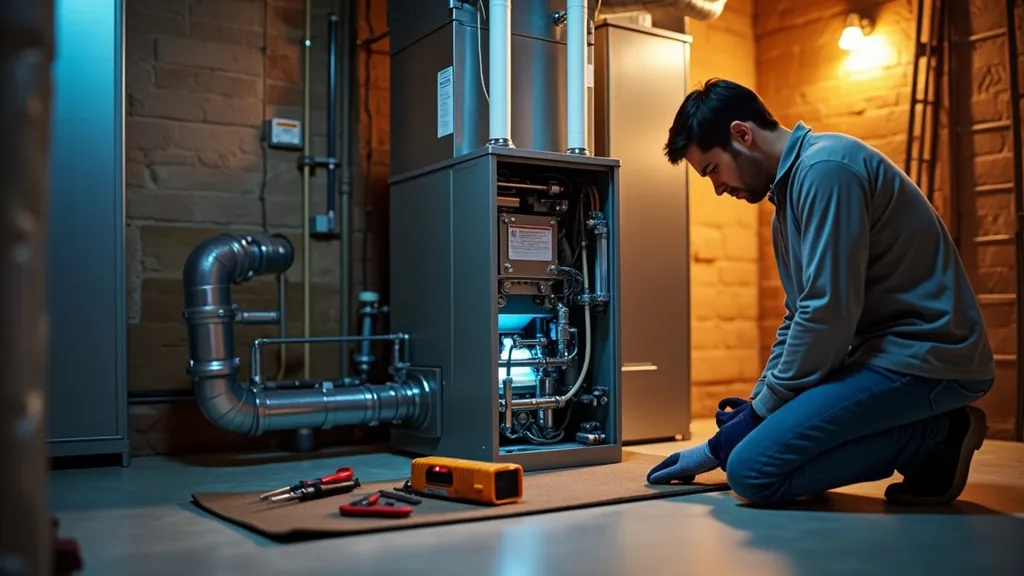
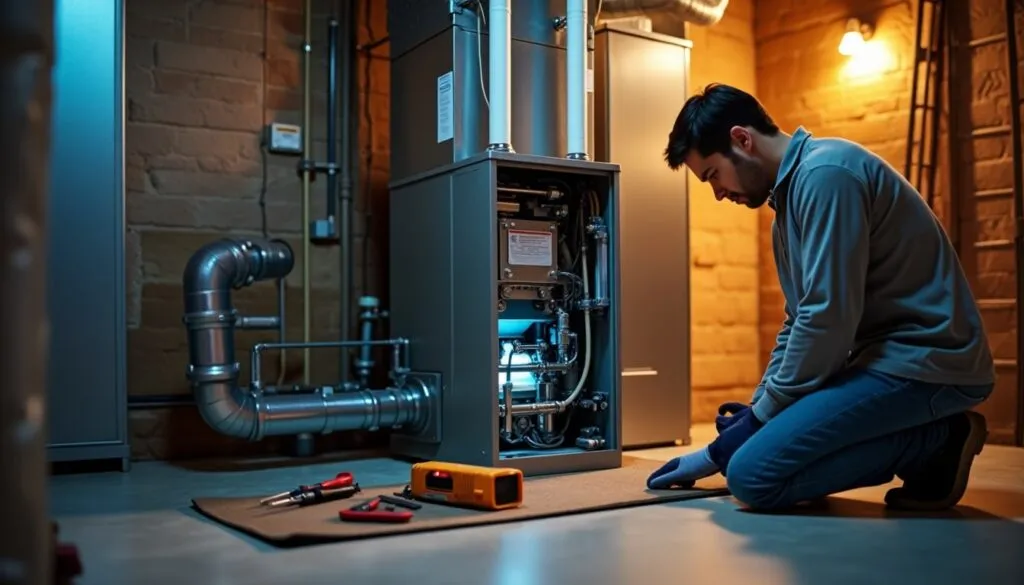
A furnace that stops heating can sometimes be traced to a thermostat setting, a loss of power, a dirty filter, or blocked airflow. Those are reasonable checks for a homeowner. Gas controls, burners, ignition systems, heat exchangers, internal wiring, and repeated electrical faults are not DIY troubleshooting areas.
Start with the routine controls you can check without opening the combustion or electrical compartments. Keep the furnace manual nearby and follow its directions for your model. If those checks don’t restore heat, have an HVAC technician diagnose the equipment.
Stop Immediately for Gas or Carbon Monoxide Warning Signs
Leave the home and call 911 or the gas utility from outside if you smell or hear leaking gas. Do not operate lights, phones, switches, or other electronics before leaving. The U.S. Consumer Product Safety Commission gives the same direction in its fuel-burning appliance safety guidance.
Treat a carbon monoxide alarm as an emergency. Move everyone to fresh air and call emergency services. Carbon monoxide cannot be seen or smelled. Possible exposure symptoms include headache, dizziness, nausea, weakness, confusion, and shortness of breath.
The CPSC recommends carbon monoxide alarms on every level of the home and outside sleeping areas, plus annual inspection and service of heating systems, chimneys, and vents by a trained technician. See the agency’s carbon monoxide safety guidance.
Do not continue troubleshooting if you notice any of these conditions:
- A gas odor, hissing near a gas line, or a carbon monoxide alarm
- Smoke, soot, scorch marks, or a persistent burning odor
- Water on or around energized equipment
- A breaker that trips again after one reset
- A damaged flue, exhaust pipe, or heat exchanger
- A furnace or electrical panel that was exposed to flooding
- Unusual combustion sounds, repeated failed ignition, or short cycling
- Anyone in the home experiencing possible carbon monoxide symptoms
Six Homeowner-Safe Checks
1. Confirm the Thermostat Setting
Set the thermostat to Heat, raise the set point a few degrees above the displayed room temperature, and wait several minutes. A programmable schedule, an accidental Cool setting, or a temporary hold can make a working furnace appear unresponsive.
If the thermostat screen is blank, replace user-serviceable batteries as directed by its manual. Do not remove wiring or jumper thermostat terminals. Loose, corroded, or unidentified wiring should be evaluated by a qualified HVAC technician.
2. Check the Furnace Service Switch
Many furnaces have a normal wall-style service switch nearby. Confirm that it is in the On position. Do not remove a switch plate or touch wiring.
Some furnaces will not operate unless the access door is fully seated because a safety interlock is open. If a user-removable filter door was recently opened, confirm that it is closed according to the manufacturer’s instructions. Do not bypass an interlock.
3. Check the Circuit Breaker Once
At the electrical panel, look for a breaker labeled furnace, heat, or HVAC. If it is tripped, move it fully to Off and then back to On one time.
If it trips again, stop. A repeated trip indicates a fault that needs professional diagnosis. Do not keep resetting the breaker, replace a fuse with a larger size, or open the furnace’s electrical compartment.
4. Inspect the Air Filter
Turn the system off at the thermostat before handling a user-serviceable filter. Note the filter size and airflow arrow, then inspect it in good light. Replace a visibly dirty disposable filter with the size and type specified by the furnace manufacturer.
An overly restrictive or incorrectly installed filter can reduce airflow. Use the furnace manual to choose the filter rating and replacement interval for your model.
5. Open Supply Registers and Clear Return Grilles
Make sure supply registers are open and that return-air grilles are not blocked by furniture, rugs, boxes, or heavy dust. Do not insert tools into ducts or remove fixed grilles while the system is operating.
If only one room is cold, the problem may be local airflow or ductwork rather than the furnace itself. Damaged, disconnected, or inaccessible ducts should be inspected by an appropriate professional.
6. Look at Exterior Intake and Exhaust Openings
From a safe position at ground level, check whether visible furnace intake or exhaust openings are blocked by leaves, debris, ice, or snow. Do not climb onto a roof or insert objects into a vent. If a vent is damaged, iced internally, inaccessible, or shared with another appliance, call a trained technician.
What Not to Do
A no-heat call is not the time to learn gas-appliance repair. Do not:
- Relight a pilot, adjust a gas valve, or clean a burner unless the manufacturer explicitly identifies the task as a consumer procedure and no warning condition exists
- Open a sealed combustion compartment
- Test live voltage, capacitors, control boards, or blower motors
- Bypass door switches, pressure switches, flame sensors, or other safety controls
- Patch or alter a flue, heat exchanger, fuel line, or condensate system
- Use a gas oven, range, grill, or unvented combustion appliance to heat the home
Modern furnaces may use electronic ignition and have no standing pilot at all. Generic pilot-light instructions can be wrong for the equipment and can create a fire, explosion, or carbon monoxide hazard.
When to Call an HVAC Professional
Call a qualified HVAC contractor when the safe checks above do not restore heat, or whenever the problem involves combustion, refrigerant, gas piping, internal electrical components, control boards, motors, venting, or repeated fault codes.
Professional service is also appropriate when:
- The furnace starts but shuts down before reaching the set temperature
- The blower runs without warm air
- The system makes new banging, grinding, buzzing, or ignition sounds
- The filter becomes dirty unusually quickly
- Rooms heat unevenly despite open registers and a clean filter
- The furnace is due for its annual inspection
The Smart Fix Handyman does not diagnose gas furnaces, repair gas leaks, or perform licensed HVAC work. We can help with separate home-repair items around the mechanical area when they fall within our service scope, but the heating equipment itself belongs with a qualified HVAC professional.
Preventing the Next No-Heat Surprise
- Schedule annual heating-system, chimney, and vent service with a trained technician.
- Test carbon monoxide alarms regularly and replace them according to the manufacturer’s instructions.
- Keep the area around the furnace clear of storage and combustible materials.
- Check the user-serviceable filter on the schedule in the furnace manual.
- Keep supply registers, return grilles, and exterior vents unobstructed.
- Save the model number, manual, installer information, and service history where they are easy to find.
Frequently Asked Questions
Why is the furnace running but the house is still cold?
A dirty filter, blocked return, closed registers, thermostat issue, duct problem, ignition fault, or equipment failure can all produce that symptom. Check only the thermostat, user-serviceable filter, registers, and obvious obstructions. If those are normal, arrange professional HVAC service.
Is it safe to reset a furnace breaker?
One reset is a reasonable basic check if there is no water, burning odor, visible damage, or other warning sign. If the breaker trips again, leave it off and call a professional. Repeated resetting can conceal a serious electrical fault.
Should I relight the pilot light myself?
Do not follow generic relighting instructions. First identify the exact furnace and consult its manual. Many modern systems use electronic ignition. If the manual does not clearly identify relighting as a consumer task, call a qualified HVAC technician. Gas odor requires leaving the home and calling for help from outside. Soot, damage, or repeated outages also need professional attention.
How often should a furnace be inspected?
The CPSC recommends annual inspection and service of home heating systems, including chimneys and vents, by a trained service technician. Follow the equipment manufacturer’s maintenance schedule as well.
Who should I call if I smell gas?
Leave immediately without operating electronics. From outside, call 911 or the gas utility’s emergency line. Do not return until emergency personnel say it is safe.
Need a Handyman You Can Trust?
Tell us what needs fixing. We’ll help you get a fair quote for the work.