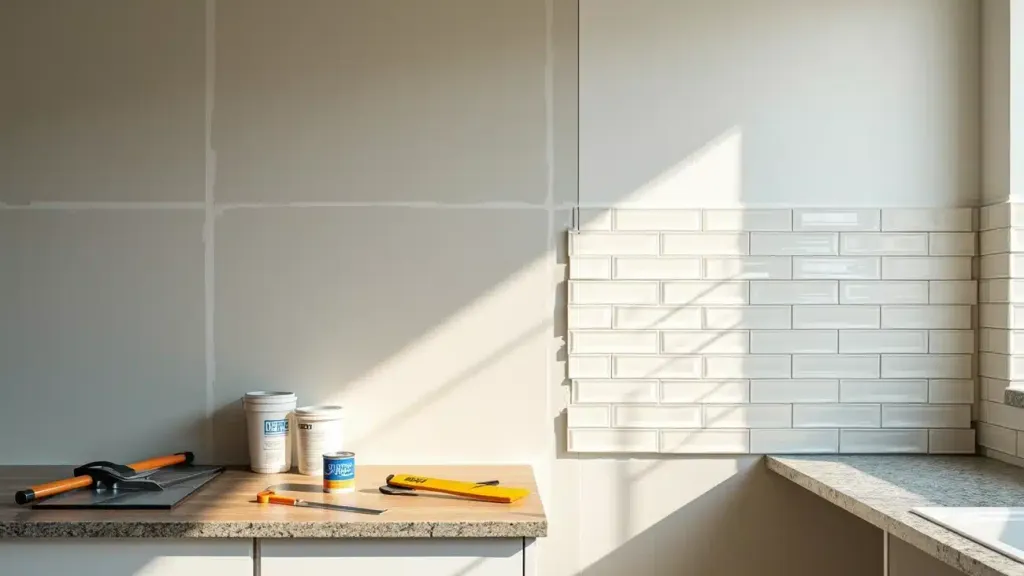
You can install tile over suitable drywall in many dry interior areas. A kitchen backsplash or decorative wall may fit that description. A shower needs an approved waterproofing system, and its instructions determine which backing is allowed.
That distinction matters. “Never use drywall anywhere in a bathroom” is too broad. “Tile makes drywall waterproof” is wrong, too.
Start with where the water goes
| Location | What to establish before tiling |
|---|---|
| Decorative wall in a dry room | The drywall is sound and the setting material accepts the substrate and tile. |
| Kitchen backsplash | The wall is clean and stable, with a tile system suitable for the splash and heat exposure. |
| Bathroom wall outside the shower | Whether the area is actually dry or regularly gets wet. |
| Shower or tub surround | The complete approved waterproofing system, including backing, seams, and penetrations. |
| Wall with a leak, softness, or visible damage | The cause and extent of damage before choosing a finish. |
The room name alone doesn’t answer the question. A bathroom wall beside a mirror and the wall behind a showerhead have different exposure.
Drywall can be part of a shower system
Schluter’s KERDI system allows drywall as a backing under its waterproof membrane. The manufacturer even provides instructions specifically addressing KERDI over drywall joints.
That is approval for the manufacturer’s system when installed correctly. It doesn’t mean tile can be bonded directly to bare drywall in a shower. Follow the full current handbook for the selected system, including compatible mortar and treatment of corners and openings.
Don’t mix a membrane from one system with details borrowed from another and assume the result is equivalent. If you’re hiring, ask the installer to name the system in the quote.
Check the wall before covering it
Loose paint, grease, torn paper, and soft board need attention before tile goes up. A tile finish can hide these problems while leaving the weak layer underneath.
Check the tile and adhesive instructions for allowed surfaces, tile size, and preparation. An adhesive approved for one wall application may have limits for large tile, damp areas, or a particular coating.
If the wall is wavy, plan how it will be flattened. Using extra adhesive to make up for every dip may exceed the product’s allowed thickness.
A backsplash needs a few extra decisions
Look at the lower edge where the tile meets the counter, the ends of the tile run, and any electrical boxes. Decide how each will be finished before buying material.
Adding tile changes the wall depth. Have any electrical box or device adjustments handled appropriately. Don’t leave an outlet supported by a loose faceplate or work around live wiring.
Near a range, check the appliance’s clearance requirements along with the tile-system instructions. A tile surface doesn’t cancel the appliance manufacturer’s requirements for the wall behind it.
What a useful quote should include
Ask whether the work covers removal of the old finish, drywall repairs, surface preparation, waterproofing where required, and edge finishing. Have the installer identify who handles electrical adjustments and how the room will be protected.
A wet or damaged wall may need a different scope once it is opened. Get the process for approving added work in writing.
For a backsplash or wall repair, send us photos of the whole area and any damaged spots. Tell us whether the wall gets wet and what finish you’re hoping to install. That helps us assess the repair before tile hides it.
Need a Handyman You Can Trust?
Tell us what needs fixing. We’ll help you get a fair quote for the work.