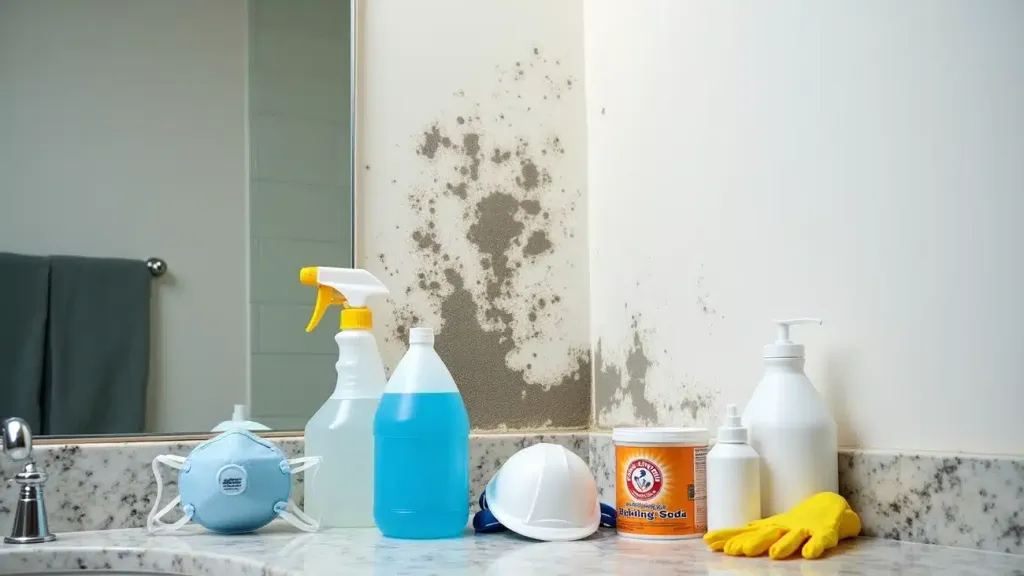
If you find mold on drywall, pause the painting or patching work. Start by finding the moisture source and deciding who should handle the cleanup. Drywall is porous, so the affected area may extend below what you can see.
The U.S. Environmental Protection Agency says that a homeowner can often handle an area smaller than about 10 square feet, depending on the source and circumstances. Larger areas, extensive water damage, contaminated water, hidden growth, or health concerns call for experienced professional help. Review the EPA’s current mold cleanup guidance before beginning any cleanup.
Before You Begin: Know When Not to DIY
Do not disturb the area while deciding what to do. Cutting, sanding, scraping, or blowing air across mold can spread particles into other rooms.
Bring in a qualified mold-remediation professional when any of these conditions apply:
- The affected area is larger than about 10 square feet
- Mold followed flooding, sewage, or other potentially contaminated water
- The drywall is soft, swollen, crumbling, or wet behind the surface
- Growth appears inside a wall, ceiling, HVAC system, or other concealed space
- The moisture source is ongoing or unknown
- The same area has returned after earlier cleanup
- Anyone in the home has asthma, significant allergies, a weakened immune system, or symptoms that may be related to exposure
- Demolition could disturb lead-based paint, asbestos-containing material, wiring, plumbing, or structural components
If someone is experiencing breathing difficulty or another urgent health problem, leave the area and seek medical care. A building contractor cannot diagnose a health condition.
Seven Safer Steps for Mold on Drywall
1. Protect People and Limit Access
Keep children, pets, and people with respiratory or immune-system concerns away from the affected space. Avoid touching or smelling the growth closely. Do not aim a household fan at visible mold; moving air can carry spores and fragments beyond the work area.
For a small cleanup that falls within EPA guidance, use appropriate gloves, eye protection, and respiratory protection. Follow the product instructions and federal guidance rather than improvising a chemical mixture.
2. Stop the Moisture Source
Mold control starts with water control. Look for a plumbing leak, roof or window intrusion, condensation, poor bathroom ventilation, or elevated indoor humidity. Repair the source and dry the area promptly.
Do not paint or caulk over a damp or moldy surface. The EPA warns that coatings applied over contaminated material are likely to peel, and concealed moisture allows growth to continue.
3. Measure the Area and Identify the Water Source
Estimate the total affected surface, including nearby spots that are likely part of the same event. The EPA’s “about 10 square feet” threshold is a decision point, not a guarantee that every smaller job is safe for every person.
The water source matters as much as the size. A small patch caused by clean-water condensation is different from an area affected by sewage, floodwater, or a long-running hidden leak. When the source is contaminated or uncertain, use a remediation professional.
4. Decide Whether the Drywall Can Remain
Drywall and gypsum board are porous. If mold has penetrated the paper facing or gypsum core, or if the panel has become soft, swollen, delaminated, or structurally damaged, surface cleaning is not a reliable repair. The affected material may need controlled removal and replacement.
A small mark limited to a sound, painted surface may be evaluated differently, but do not soak drywall or assume that a clean-looking surface means the back side is dry. If you cannot confidently determine the extent, stop and ask an experienced remediator.
5. Clean Only Within the Safe, Documented Scope
For hard, nonporous nearby surfaces, the EPA recommends detergent and water followed by complete drying. Porous materials can be difficult or impossible to clean fully and may need disposal.
The EPA does not recommend chlorine bleach as a routine mold-cleanup practice. It also warns never to mix bleach with ammonia, detergents, or other cleaning products because toxic fumes can result. Do not combine vinegar, peroxide, bleach, ammonia, or commercial products. Read the EPA’s bleach and mold guidance and follow every product label.
Avoid sanding, dry brushing, aggressive scraping, or uncontained demolition. Those activities can spread contamination and may expose hidden building hazards.
6. Dry and Verify Before Rebuilding
The moisture source must be repaired and the wall cavity, framing, and remaining finishes must be dry before new drywall, primer, paint, trim, or insulation is installed. A professional may use moisture measurements and containment checks appropriate to the job.
Do not rely on odor alone. A musty smell after cleanup can indicate remaining moisture or hidden growth. If staining, odor, or dampness returns, stop cosmetic repairs and investigate the underlying cause.
7. Rebuild and Prevent Recurrence
After remediation is complete and the area is dry, damaged drywall can be replaced, finished, primed, and painted. Prevention should address the original cause:
- Repair plumbing, roof, siding, window, or ventilation defects
- Use bathroom and kitchen exhaust fans that vent outdoors
- Keep indoor humidity below 60 percent and ideally between 30 and 50 percent when practical
- Dry wet materials promptly
- Check repaired areas after heavy rain or seasonal humidity changes
The Smart Fix Handyman does not inspect for mold, determine whether a building is safe, or perform mold remediation. Once that work and any required clearance are complete, we can assess ordinary drywall and finish repairs within our service scope.
Why Chemical “Kill Methods” Are Not the Main Answer
Mold does not stay away because a strong-smelling product was applied. The lasting fix is to remove contaminated material when needed, clean suitable surfaces, dry the assembly, and prevent new moisture. The EPA notes that dead mold may still cause allergic reactions, so simply killing organisms is not enough.
Claims that one household product is always best for drywall ignore differences in surface coating, depth, water source, occupant health, and the condition behind the wall. A decision process based on those facts is safer than a list of chemical recipes.
Frequently Asked Questions
Can I paint over mold on drywall?
No. Correct the moisture source and complete the appropriate cleanup or removal first. Paint and caulk do not solve active growth, and coatings applied over contaminated surfaces are likely to fail.
Is bleach recommended for mold on drywall?
The EPA does not recommend bleach or another biocide as a routine mold-cleanup practice. Never mix bleach with ammonia, detergents, or any other cleaner. Porous drywall may require removal rather than chemical treatment.
Is a small patch always safe to clean myself?
No. The EPA says areas smaller than about 10 square feet can often be handled by a homeowner, but the water source, location, material condition, occupant health, and possibility of hidden growth all matter. Contaminated water, HVAC involvement, concealed damage, or uncertainty warrants professional help.
How do I know whether drywall must be replaced?
Replacement is more likely when the panel is soft, swollen, crumbling, delaminated, wet through, visibly affected below the coating, or contaminated on the back side. An experienced remediator can determine the proper containment and removal scope.
Who should repair the wall after remediation?
Use a qualified remediation professional for the contamination work. After the source is fixed, the material is dry, and any required clearance is complete, a drywall professional or appropriately scoped handyman service can rebuild and finish the wall.
Need a Handyman You Can Trust?
Tell us what needs fixing. We’ll help you get a fair quote for the work.